Technical Brief
VestaRelief: The Real-Time Disaster Relief Thermometer
Project Focus: Strengthening community resilience by connecting local needs to global help through verified, real-time data.
Standards: Open Referral HSDS v3.0, Salesforce.com,
Core Architecture: Salesforce-based Interoperable Hub-and-Spoke Data Exchange
Verification Partners:Address Verification, NPO Verification, Person Verification.
Platform Partners: Salesforce.com for infrastructure. Twilio.com for messaging. Authorize.net for donation management.
Proof of Concept Site: https://vestarelieftrial--dev.sandbox.my.site.com/s/?language=en_US
The Narrative: The Hearth Rebuilt
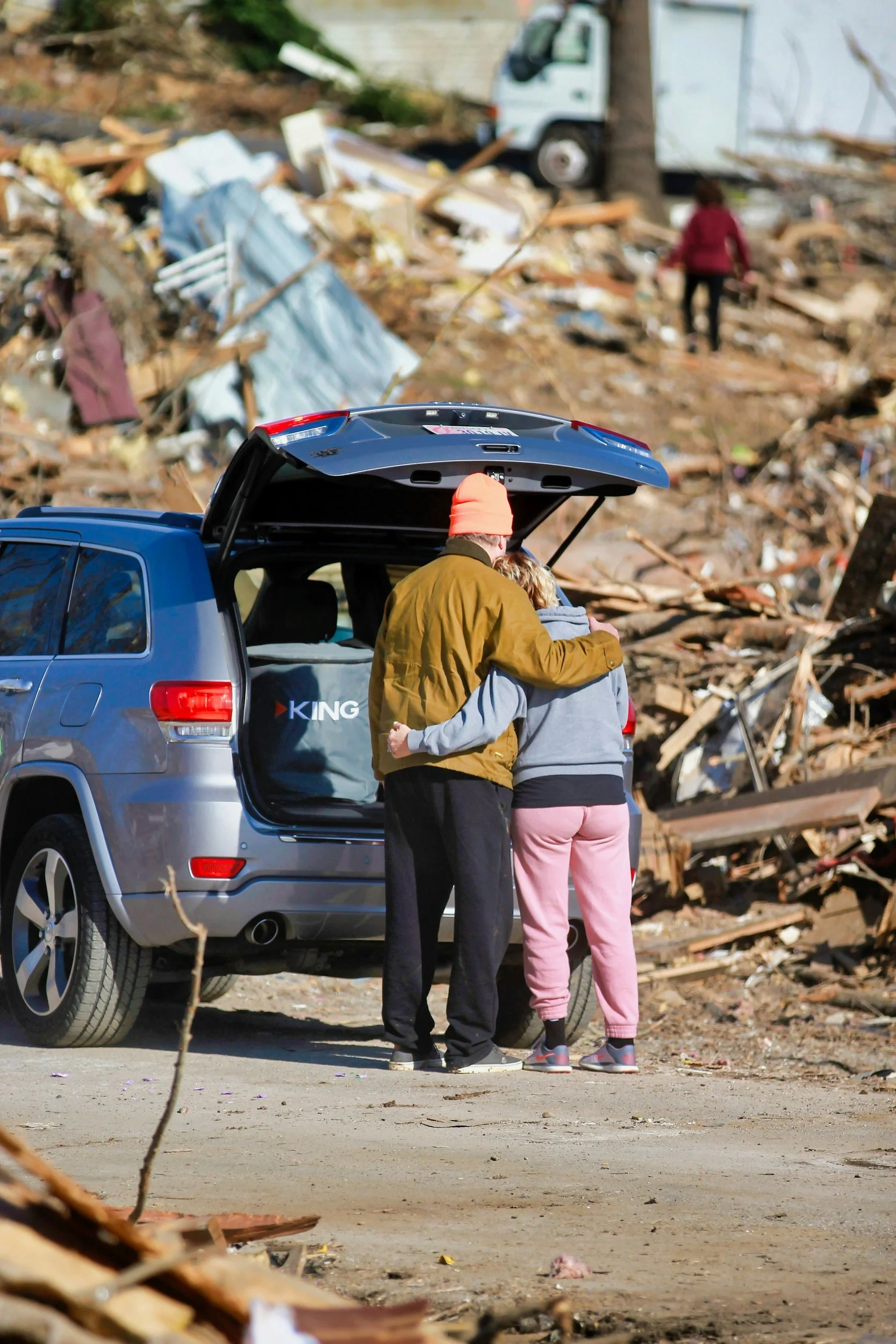
In the legacy model of relief, this family faces a chaotic scramble—visiting multiple resources for water, shelter, security, communication, transportation and fanaicial support. This is a data coordination failure. The resources exist, but the information is trapped in siloed relief efforts.
The VestaRelief Real-Time Disaster Relief Thermometer acts as the "Digital Hearth." It is the one place where the flame of information never goes out. By standardizing the "Organization," the "Service," and the "Schedule," we ensure that survivors never arrive at a closed door. We provide the reliability that people need to begin breathing again.
VestaRelief is a charitable organization dedicated to modernizing disaster relief through the provision of standardized digital infrastructure. Inspired by the Roman goddess Vesta—the keeper of the hearth and communal security—our mission is to ensure that the "flame" of vital information never goes out for families displaced by crisis.
When disasters strike, the primary barrier to recovery is often a "fractured hearth": a chaotic environment where relief data is siloed across incompatible systems. VestaRelief addresses this by implementing the Open Referral Health and Human Services Data Standard (HSDS). This technical framework acts as a "Digital Hearth," consolidating essential recovery data into a single, reliable ecosystem. HSDS combined with our partner organizations come together to bring a framework for relief for families experiencing desperate times.
Our primary activities include:
Entity Verification: We maintain a database of verified "Organizations" to prevent fraud and ensure survivors reach legitimate aid.
Individual Verification: We verify a person’s address and ensure that address is currently in or nearby an active "Major Disaster Declaration" that provides individual assistance.
Service Mapping: We provide precise, real-time mapping of "Services" (food, shelter, medical care) to specific "Locations," ensuring survivors have a clear path to recovery.
Operational Reliability: Through standardized "Schedules," we ensure that no survivor arrives at a closed facility.
By utilizing the HSDS format, VestaRelief enables incoming relief agencies to "plug in" to our infrastructure instantly. This interoperability ensures that the community’s support network remains cohesive. Our goal is to provide the data reliability necessary for survivors to regain their sense of security and rebuild their lives. VestaRelief does not just manage data; it maintains the essential information infrastructure that keeps communities together during their most vulnerable moments.
Executive Summary: Solving the Informatics Gap
Disaster recovery is currently a "market failure" characterized by unverified demand signals and siloed supply. Historically, aid distribution is driven by anecdote rather than real-time ground truth—resulting in massive resource misallocation.
This platform provides a high-integrity informatics layer that connects Verified Demand (families in crisis) to Verified Supply (vetted providers). It creates a live, global "thermometer" of human need that is visible, measurable, and actionable.
The Informatics Engine: High-Fidelity Verification
We replace unverified sentiment with a Double-Sided Verification Protocol:
Verified Demand: The system utilizes geospatial parcel data and official Disaster Declarations to verify that a request for aid originates from a physical address within an impact zone. This prevents fraud and ensures the "Need Temperature" is based on actual residents.
Verified Supply: The platform integrates global vetting registries to validate nonprofits. Only high-impact, legitimate organizations populate the resource map, ensuring survivors are never routed to fraudulent or inactive sites
Infrastructure: Open-Source Hub & Spoke
To ensure scalability and prevent proprietary silos, the architecture is built as Digital Public Infrastructure (DPI):
Open Source HSDS: By implementing the Human Services Data Specification (Open Referral), the platform establishes a standardized "human services schema." This allows any incoming agency to "plug in" to the infrastructure instantly.
The Hub-and-Spoke Model: A central hub allows organizations to sync inventory and resource data via an open source installable "Spoke" package. This creates a unified, global view of available aid in real-time, available to tens of thousands of nonprofits.
Logistics Integration: The infrastructure connects partner supply data to nonprofit demand, ensuring that the "last mile" of delivery for essential goods is informed by accurate, ground-level inventory.
Explainable AI (XAI): Transparency in Crisis
The platform utilizes Explainable AI (XAI) to ground individual needs against verified addresses, disaster severity, and available supply. Unlike "black box" algorithms, XAI provides clear reasoning for every resource recommendation. If the "Thermometer" shows a spike in demand for medicine while donors are funding food, the XAI-driven dashboard informs the world of the actual demand—shifting resources toward the items that will actually save lives. This transparency fosters trust and allows for audits to ensure equitable aid distribution.
Strategic Impact: Data as a Public Good
By shifting the focus from "managing data" to "providing intelligence," this project creates a permanent, searchable record of global resilience. Unlike legacy relief efforts—which often rely on static maps, unverified rumors, and siloed spreadsheets—The Relief Thermometer revolutionizes disaster response by providing real-time, verified demand signals through an HSDS-compliant, open-source hub. By moving away from anecdote-driven logistics and fractured services, the platform utilizes XAI-validated ground truth for precise routing, effectively transforming a chaotic landscape into a "Digital Hearth" that serves as the definitive single source of truth for the entire community.
The Sustainable Business Model: A Pay-It-Forward Lifeline
Historically, the disaster relief sector has been a competitive landscape where supply-side organizations and vendors vie for the same corporate donations and government grants. This "scarcity mindset" creates information silos that ultimately hurt the survivor. VestaRelief breaks this cycle by shifting the focus to a demand-side sustainable model. We do not compete with nonprofits for overhead; instead, we provide the infrastructure that makes every dollar they raise more effective.
The "Pay-It-Forward" Revenue Stream
Our model is built on the belief that resilience is a shared global responsibility. We serve a vast demographic: in 2024 alone, over 167 million people were directly impacted by natural disasters, with economic losses exceeding $241 billion. By 2025, climate-related events impacted more than 87 million people globally. This represents a massive population of survivors, many of whom—regardless of their financial standing before the crisis—understand the life-saving value of accurate information.
VestaRelief implements a "Pay-It-Forward" individual donation model. Rather than charging for access to the "Digital Hearth," we invite those who have been helped—or those who wish to ensure the light stays on for the next community—to contribute a small, recurring "Resilience Subscription."
The Power of Small Contributions: If just 1% of the 167 million people impacted annually contributed a modest $5/month, it would create a $100 million annual sustaining fund.
Direct Impact: This revenue is reinvested into maintaining the Open Source HSDS infrastructure, keeping the data verified and the "Thermometer" active for future crises.
Ending the Silo Wars: Because our funding comes from a distributed base of global citizens rather than a fixed pool of corporate CSR budgets, we remain a neutral, third-party informatics layer. We are not a competitor to the Red Cross or local NGOs; we are the utility that powers them all.
A New Engine for Philanthropy: The Surplus Pass-Through
VestaRelief is designed to be a "pass-through" entity for global solidarity. Once our core operational requirements are met, 100% of the surplus funds generated by the Pay-It-Forward model are redistributed back into the field:
Direct-to-Impact Grants: Surplus funds flow directly to our nonprofit partners who are active within the network and providing verified services via the HSDS standard.
Rewarding Integrity: By acting as a grant provider, VestaRelief incentivizes data transparency. Nonprofits that maintain real-time, accurate resource feeds for survivors are prioritized for funding, ensuring that the most helpful organizations have the most resources.
By turning survivors and allies into stakeholders, VestaRelief transforms disaster response from a series of "one-off" charitable acts into a permanent, self-sustaining piece of Global Digital Public Infrastructure. We ensure that when the next flood comes, the "Hearth" is already built, the light is already on, and the path home is already clear.